
The Norwegian family-owned group, Havila Holding, is investing heavily in renewable energy through its subsidiary Havila Biogass. Operating with an “infinity perspective” and a long-term industrial foundation, the company aims to become Norway’s leading commercial biogas operator. A cornerstone of this strategy is the planned biogas plant at Heggvin Business Park.
Heggvin is highlighted as one of the most complete and strategic locations in the country for this type of industry. The location offers unique advantages, including proximity to vast agricultural areas providing excellent access to substrates (raw materials such as livestock manure), as well as closeness to partners within the business park.
Modular Technology and Liquefied Biogas (LBG)
The Heggvin-facility will utilize standardized and modular technology that Havila Biogass replicates across multiple projects. This makes project development more efficient and strong, as lessons learned from previous plants are continuously incorporated.
While the company’s first plant produced compressed biogas (CBG), the Heggvin-facility will employ advanced liquefaction technology.
This process cools the gas until it turns into liquid form, known as LBG (Liquefied Biogas) or bio-LNG.
LBG offers two distinct advantages. First, it enables more efficient transport. Liquid gas has a significantly higher energy density than compressed gas, allowing transport vehicles to carry far more energy over longer distances. Secondly, LBG is an attractive product in high demand as a green fuel for heavy transport and industries undergoing a green transition. The LBG plant will also liquefy the CO2 generated during the process, allowing it to replace fossil-based CO2 in the commercial market.
Capacity, Finances, and Jobs
Heggvin will be a large-scale plant by Norwegian standards. The planned reactor tanks will rise 20–30 meters above the ground, and investment costs are estimated at approximately NOK 600 million. Once the facility is completed in 2028, it will be capable of producing around 91 GWh gross. After accounting for its own energy consumption, the net annual production will be around 75 GWh, equivalent to the annual energy consumption of approximately 4,500 detached houses.
Although the biogas plant itself will not generate many direct jobs once operational (3–5 employees), it will contribute to significant indirect employment within transport, mechanical maintenance, and contracting services.
Industrial Symbiosis: Circular Economy in Practice
By its very nature, a biogas plant is a circular economy enterprise. Havila Biogass is actively working to integrate the Heggvin facility into an industrial symbiosis with neighboring businesses and the local community.
This means that the plant will utilize waste heat. Havila is looking at the possibilities of utilizing waste heat from major operators in the business park, such as data centers that are already located there, for processes such as sanitizing substrates, which currently require a lot of electricity. The captured CO2 and waste heat could potentially be supplied to greenhouses or other industrial purposes in the future, for example.
Agriculture as a Key Partner
The plant will bring substantial benefits to the agricultural sector in the Innlandet region. Farmers will deliver livestock manure to the facility and receive a refined, bio-regulated fertilizer product in return.
This returned fertilizer has a guaranteed quality, is more free-flowing, and contains a higher amount of readily available nitrogen. This allows farmers to maintain or improve their crop yields while reducing fertilizer costs.
Havila is also investigating advanced separation technology. By extracting a phosphorus-rich dry matter fraction from the manure, it becomes possible to dry and refine this into organic compound fertilizers, such as NPK fertilizer. This product can easily be stored, sold to grain and vegetable farmers who require organic fertilizer, or transported out of the region to prevent local phosphorus surplus.
Environment, Safety, and the Local Community
Havila places great emphasis on being a safe and responsible neighbor, drawing important lessons from previous incidents at other facilities.
The reception and processing of raw materials will take place entirely within enclosed buildings operating under negative pressure and equipped with specialized filters to eliminate odor particles. Rotating components and noise sources will also be placed indoors to minimize process noise. Local analyses show that both noise and odor levels will remain well within acceptable limits. Regarding traffic, there will be a minor increase, estimated at approximately 30 vehicles per day, which the established industrial park is well-dimensioned to handle.
Havila is conducting thorough Quantitative Risk Analyses (QRA) in connection with its application for consent. By deliberately designing the facility to remain below the strictest major accident regulations (the Paragraph 6 level), the company ensures minimal risk of dispersion and maintains excellent control over safety zones regarding third parties.
The Path Forward
The Heggvin project is highly mature from an administrative and regulatory standpoint. The framework application, land purchase agreement, and discharge permit are either already secured or on track. The final major piece of the puzzle is the ongoing application for consent.
Havila Biogass aims to reach a final investment decision following its sister project in Støren. The company plans to break ground toward the end of the year or in early 2027, with the goal of bringing the plant into commercial operation during 2028.
“The signing with Havila is important from multiple perspectives, both regarding the realization of Heggvin, but also as an asset to a strong agricultural region. With the establishment of a biogas plant at Heggvin, we have a vital piece in place to succeed with industrial symbiosis and, in the long term, establish a circular business park,” says Berte Sollerud Helgestad, Business Developer at Hamarregionen Utvikling.
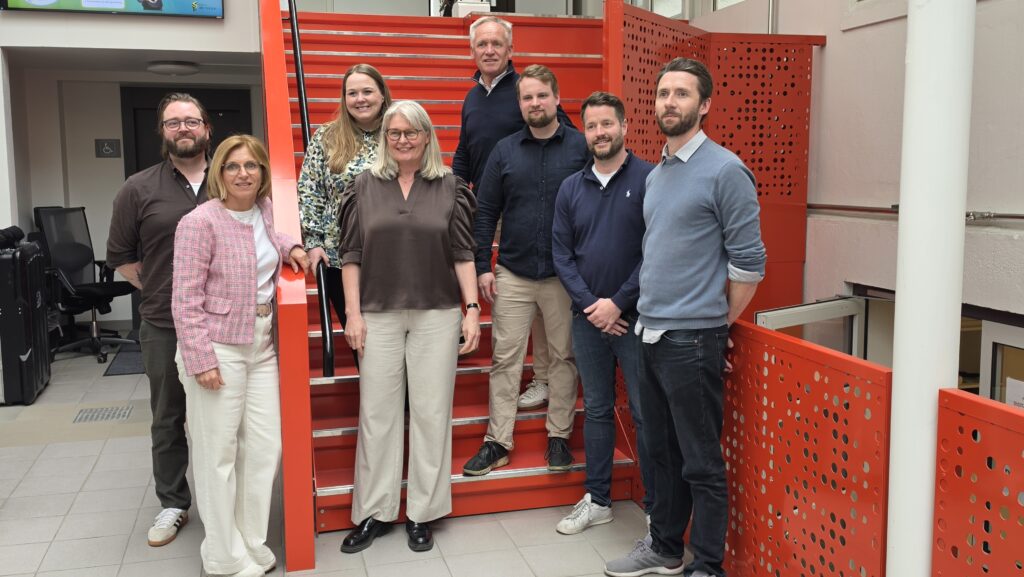
(From left) Emil Nordal and Berte Helgestad from Hamarregionen Utvikling. Marte Larsen Tønset, Mayor of Løten, Vigdis Stensby, Mayor of Hamar, Svein Frydenlund, Head of Economic Development, Hamar, Runar Kristensen and Espen Bygdevoll from Havila, and Simen Landfald from Eidsiva Vekst.
Copyright © 2026. Heggvin Industrial Site. All rights reserved.