After 40 years in Oslo, Gerd Sletmoen-Nordli (67) did what most people only dream of. She packed up her life, quit her job, sold her apartment, and moved to Løten to follow a gut-feeling, testing her practical wisdom and a slightly wild idea.
It would turn out to be a choice that not only changed her life but also helped strengthen the local community, the business sector, and, not least, the food culture of the entire region.
A Local Station is Born
The opportunity came somewhat by chance, sparked by a single phone call from her sister-in-law.
“The local station is becoming available; now is your chance,” was the message Gerd received. “I was also told I had very little time to decide,” she recalls.
First came a series of meetings, followed by a presentation of a concept built on homemade food, quality, and heartfelt hospitality.
“After my presentation to the municipality, it took no more than half an hour before they called me back and said they wanted me,” Gerd smiles. The rest is history, and that history smells of delicious baked goods!
Gerd started without a background in the restaurant industry. However, she had broad experience in purchasing, sales, and food packaging, along with a sincere desire to create something meaningful for people. “I built everything from scratch and hired a team. They have stayed with me the whole way. Predictability is important, and together we have created a workplace where laughter, security, and cooperation have become part of the menu,” she says.
Green Industry Meets Local Culinary Joy
When Green Mountain and the development at Heggvin arrived, it opened new doors for the entire region. For Gerd and the ladies at the “Nærstasjon” (The Local Station), it was an encounter between global technology and local food. The warm lunches delivered by the station became an essential part of daily life during the construction period. “There were thirty men, but I had to make enough food for sixty. Those boys could eat, you know,” Gerd chuckles.
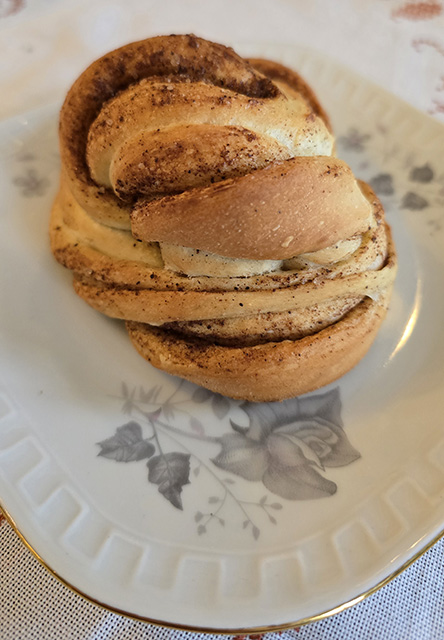
The assignments from Heggvin and Green Mountain gave the station both experience and financial security. For a period, nearly a third of their catering business came from there. Gerd and her team proved that a small business with a tiny kitchen can deliver high-quality, homemade hot meals to major international players. “Such ripple effects are often mentioned in grand strategies for green industrial growth, but the scent of freshly baked cinnamon rolls rarely makes it between the pages of those reports,” Gerd says with a twinkle in her eye.
Local Jobs in Practice
In an era where automation and large-scale operations dominate the food industry, Løten Nærstasjon goes the opposite way.
Everything there is made by hand. Rajaa Alhjumany (46) is the station’s head of baking. She bakes hundreds of cinnamon rolls without the use of machines. She has been a faithful employee for ten years. Even when she took her trade examination, she did it all by hand, much to the examiners’ great delight. Eli Grevestad (64) has also been part of the journey from the beginning. “We have some students who help out until they eventually move away from the village. Here, it’s all about local labor and local pride. We see it as proof that small businesses can be significant building blocks in the local community,” Gerd notes.
Catering for a Million – and a House Full of Life
Today, Løten Nærstasjon delivers catering worth nearly one million NOK a year.
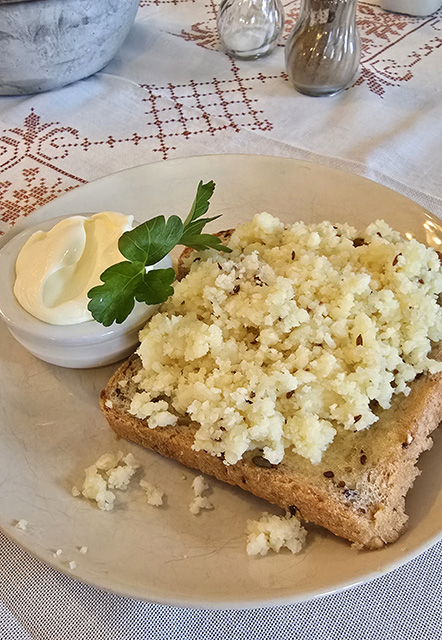
Cakes, meeting food, tapas, confirmations, and parties, all made from local ingredients. “We buy eggs, potatoes, pultost (a traditional cheese), and meat from local suppliers. It’s short-travelled value creation in practice. When we use local production, it fuels local effort, which in turn creates local demand. It is local life in practice,” says Gerd.
A Living Museum
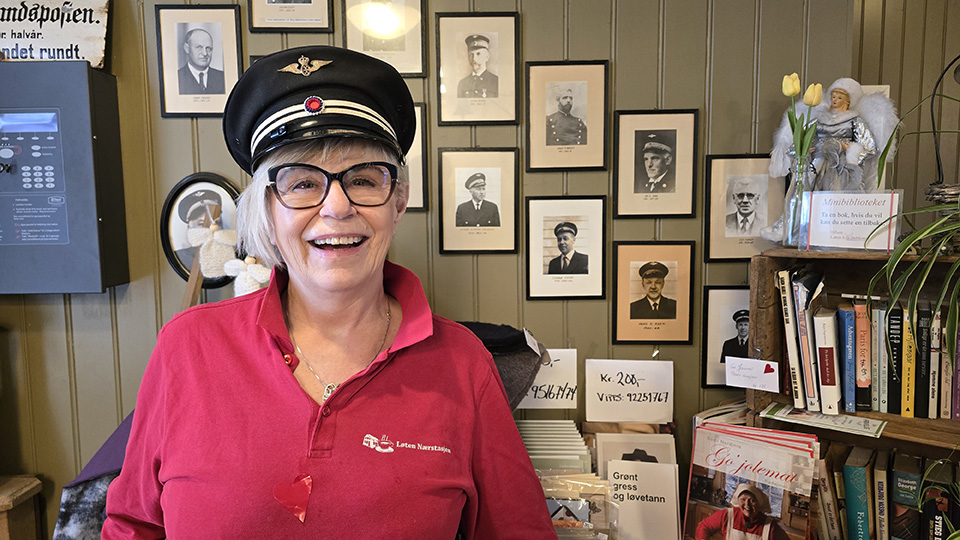
At Løten Nærstasjon, guests sit close to history inside the old station building. There are portraits of old stationmasters, uniform caps, and photos from a bygone golden age, alongside art by local creators. But it doesn’t stop there. The station has become a sort of small museum, where you always find fresh coffee and the smell of fresh baking!
“All the tables here are unique. We have tables that are over a hundred years old, which gives the place its own charm. The tablecloths belonged to my mother and mother-in-law, so there’s quite a bit of washing and pressing involved,” Gerd explains.
A Social Hub
Gerd has created more than just a café; she has created a place where people belong. They host quiz nights, “knitting cafés,” and private parties. Another regular fixture is the “Dementia Café” on Saturdays. “The ‘Forget-Me-Not’ sessions are truly popular for those with dementia and their relatives. It’s lovely to see how they blossom,” Gerd smiles.
The highlight of the year, in terms of hustle and bustle, is the Aquavit and Pultost Days. “Then it’s full speed all weekend with plenty of chaos and joy. We are quite experienced now, so with good planning, we run into very few problems,” says Gerd.
The Vintage Car Club also holds its events here. “Løten Kick and Pedal” adds to the atmosphere with their vintage vehicles. “And if someone is celebrating a birthday, I find the stationmaster’s hat, put on some lipstick, and sing the birthday song. You have to give a bit of yourself,” Gerd smiles.
The Heggvin Effect – Seen from a Kitchen
Many people discuss the pros and cons of data centers and industrial development. Where there is sun, there is also shadow.
“Sure, everything has its downsides. But it also has its positives. For us, it has meant many assignments, a lot of experience, new companies discovering us, and increased activity in the region,” Gerd says.
The green industrial boost isn’t just about data centers, environmental technology, and power grids. It’s also about work for local suppliers; it’s about a small local station being able to grow and a community gaining new opportunities. “We’ve gained many new customers. The deliveries to Green Mountain were important for us, and we see that more catering orders are coming in now. The orders don’t just come from Løten, but also from Hamar and other local businesses. When major players establish themselves, a need for food, services, and cooperation follows. That is exactly where the station has shown how important the small players can be,” says Gerd.
Looking Ahead – With Good Humor and Big Plans
Business is good. They are turning a profit, and the ladies at Løten Nærstasjon are only looking forward. “With more orders comes the need for a bit more space, so we are wishing for our own dedicated bakery and catering premises, a place where we can produce even more. Because the orders are definitely there,” she says.
Gerd is an optimist, and it’s hard not to be when you’re standing in the middle of the scent of the world’s freshest eggs, newly baked bread, and cakes, in a village café buzzing with life. Her story is a powerful example of what local courage, good relationships, and a little bit of “craziness” can create.
“We must all adapt and do what we can so that we all stand side-by-side with development. Green industrial development isn’t just jobs and technology; it also lifts small businesses, culture, meeting places, and everyday life,” Gerd concludes.
And in the middle of all this, Gerd, Eli, and Rajaa are doing just fine. Whether they have the stationmaster’s hat on, a mixing bowl on the table, or the coffee pot circulating among the tables at the station. Perhaps that is exactly the core of the green industrial boost in practice, that large investments become even better when they meet people who care and see the possibilities.
Just like Gerd has done.
Copyright © 2026. Heggvin Industrial Site. All rights reserved.